Thanks to the kindness of others, I have my seed lineup set for next year. I'll be plantinga 2145 McMulllen (1756 Howell/Jullivette x 1625 Gantner), a 1974 McConkie (2261 Wallace x Self) and a 1764 McConkie (1937 Urena x 2261 Wallace). Basically if there isn't a capital M in the middle of the growers last name then I won't grow it. lol
I'm really excited to start these seeds next year. Like I talked about in my last post, the 2145 has been the best performing seed ever (hope I got one of those). The two McConkie seeds I think have similar potential. I saw both plants and they were very impressive growers. In particular the plant that grew the 1974 was a very aggressive grower and I like that. In my cooler climate I need the plants to get as big as they can as fast as they can.
Showing posts with label pumpkin seeds. Show all posts
Monday, December 4, 2017
Wednesday, March 29, 2017
Updated Seed Lineup
I saw a post yesterday about a seed that I had forgotten about that I wanted to grow. The 819 Radach (1655 Ford x 2009 Wallace). Joe Scherber grew this seed two years ago. When he said he was growing it, I have to admit that I said, "huh?" Obviously not a big pumpkin at 819 pounds and it wasn't listed as a damaged pumpkin, so it had grown to full-size, so I couldn't figure out why Joe was giving it dirt. Then I got the back story.
Matt grew three pumpkins in 2014. One was a 1655 Ford and another was a 2009 Wallace. The 1655 Ford seed was one that probably should have seen more dirt. Joe grew that seed previously and set a new Colorado state record from it. An aggressive plant. I think he and Matt were the only two to grow it.
The 2009 Wallace is probably the greatest seed of all time and has grown multiple world records. What makes Matt's pumpkins very interesting is the fact that he grow both pumpkins on only 290 square feet! Less than half of what most growers plant sizes would be. He has limited space and literally had vines wrapped around bushes. The 2009 Wallace grow a 1,223 pound pumpkin. That is 51% bigger than any pumpkin he had grown previously (which is a number that I think is worthwhile looking at when considering which seeds to grow). Makes you wonder how big that pumpkin could have gotten if it had more space.
Joe grew that 819 seed to 1404 pounds. An aggressive plant. Andy Corbin grow the seed from the 2009 Wallace pumpkin and grew a personal best from it. The genetics are in there.
I'll have my son or daughter grow the 819 seed. I really like those Barron seeds, but they haven't produced anything as big as the mother and progeny from the progeny haven't produced anything as big as the mother either, so the genetics are good, but nothing that seems to want to grow a world-record sized pumpkin. I think the 819 has shown a little more oomph and have shown to be a able to grow at altitude.
Matt grew three pumpkins in 2014. One was a 1655 Ford and another was a 2009 Wallace. The 1655 Ford seed was one that probably should have seen more dirt. Joe grew that seed previously and set a new Colorado state record from it. An aggressive plant. I think he and Matt were the only two to grow it.
The 2009 Wallace is probably the greatest seed of all time and has grown multiple world records. What makes Matt's pumpkins very interesting is the fact that he grow both pumpkins on only 290 square feet! Less than half of what most growers plant sizes would be. He has limited space and literally had vines wrapped around bushes. The 2009 Wallace grow a 1,223 pound pumpkin. That is 51% bigger than any pumpkin he had grown previously (which is a number that I think is worthwhile looking at when considering which seeds to grow). Makes you wonder how big that pumpkin could have gotten if it had more space.
Joe grew that 819 seed to 1404 pounds. An aggressive plant. Andy Corbin grow the seed from the 2009 Wallace pumpkin and grew a personal best from it. The genetics are in there.
I'll have my son or daughter grow the 819 seed. I really like those Barron seeds, but they haven't produced anything as big as the mother and progeny from the progeny haven't produced anything as big as the mother either, so the genetics are good, but nothing that seems to want to grow a world-record sized pumpkin. I think the 819 has shown a little more oomph and have shown to be a able to grow at altitude.
Sunday, March 26, 2017
2017 Giant Pumpkin Seed Lineup
This year I've got three/four different seeds in the lineup. I'm going to grow a 1685 Scherber and my own 747 Johnson Atlantic Giant pumpkin seed. Last year a new world record was grown off of the 2145 McMullen seed that was a whopping 2,624 pounds. The was a significant increase over the previous world record and I wouldn't be surprised if the world record wasn't broken this year because of it.
The 1685 seed is a cross of the 800 McMullen with the 2145 McMullen. The 800 McMullen is a seed that is lower on the radar, but it is the reverse cross of the 2145 (same mama and papa). So basically the cross of the 1685 is all the same genetic lines of the 2145. The 1685 set a new Colorado state record by a fair amount and since it was grown at altitude and it nearly went to chart (Joe's big pumpkins almost never go near the chart) it is a pretty intriguing seed. I and one of my kids are both going to grow this seed.
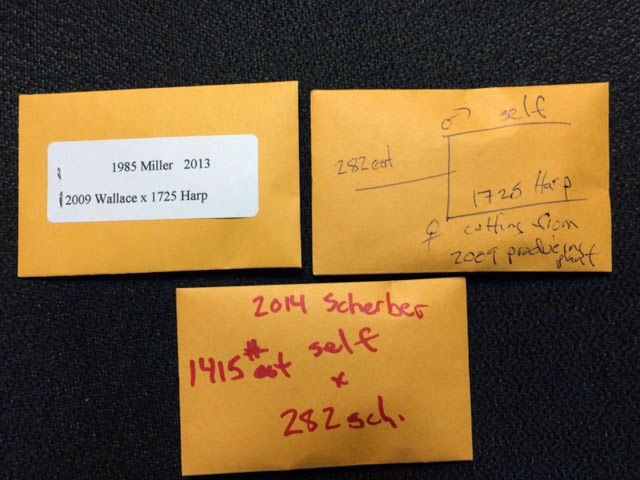
My 747 seed is a cross of the 1985 Miller with the 282 Scherber. That 1985 plant was the best looking plant I had ever had early in the season. For the first three weeks the pumpkin was just verily off the pace of my 1421 pumpkin that was a super fast grower and it ended up 15% heavy, so weight wise it was probably heavier than the 1421 at the first part of the season. The problem was that I didn't realize that the plant for two weeks was only getting about 25% of the water that it should have due to an irrigation timer problem and as a result the plant nearly shut down. For a day or two the pumpkin didn't show any signs of growth and once I discovered the problem it was almost too late.
The 282 Scherber pollinator is a selfed clone of the plant that grew the world-record 2009 pumpkin. The first pollination on that plant was a barn burner for the first week, but a hernia in one of the lobes badly mis-shapened the pumpkin so I had to take it off. The second pollination aborted due to the watering problems and a late season third pollination split on me. The plant was badly damaged due to the lack of water.
Kind of a risk growing a seed from plants that really produced nothing, but I like the genetics and a saw glimpses of what the plants could have produced so I kind of feel it is worth the try. I also like the 1725 genetics in this seed because they are coming from the very best of the 1725 lines.
My son or daughter will grow one of the Barron seeds. We'll start the 1916 and the 1738 seed. Both seeds progeny to this point have been a little disappointing considering the cross, but I kind of believe there has to be one super star, magic seed out of that cross still. Mom and pop did too well not for a big one to come out of them. Also wouldn't mind seeing a nice orange pumpkin in the patch.
The 1685 seed is a cross of the 800 McMullen with the 2145 McMullen. The 800 McMullen is a seed that is lower on the radar, but it is the reverse cross of the 2145 (same mama and papa). So basically the cross of the 1685 is all the same genetic lines of the 2145. The 1685 set a new Colorado state record by a fair amount and since it was grown at altitude and it nearly went to chart (Joe's big pumpkins almost never go near the chart) it is a pretty intriguing seed. I and one of my kids are both going to grow this seed.
My 747 seed is a cross of the 1985 Miller with the 282 Scherber. That 1985 plant was the best looking plant I had ever had early in the season. For the first three weeks the pumpkin was just verily off the pace of my 1421 pumpkin that was a super fast grower and it ended up 15% heavy, so weight wise it was probably heavier than the 1421 at the first part of the season. The problem was that I didn't realize that the plant for two weeks was only getting about 25% of the water that it should have due to an irrigation timer problem and as a result the plant nearly shut down. For a day or two the pumpkin didn't show any signs of growth and once I discovered the problem it was almost too late.
The 282 Scherber pollinator is a selfed clone of the plant that grew the world-record 2009 pumpkin. The first pollination on that plant was a barn burner for the first week, but a hernia in one of the lobes badly mis-shapened the pumpkin so I had to take it off. The second pollination aborted due to the watering problems and a late season third pollination split on me. The plant was badly damaged due to the lack of water.
Kind of a risk growing a seed from plants that really produced nothing, but I like the genetics and a saw glimpses of what the plants could have produced so I kind of feel it is worth the try. I also like the 1725 genetics in this seed because they are coming from the very best of the 1725 lines.
My son or daughter will grow one of the Barron seeds. We'll start the 1916 and the 1738 seed. Both seeds progeny to this point have been a little disappointing considering the cross, but I kind of believe there has to be one super star, magic seed out of that cross still. Mom and pop did too well not for a big one to come out of them. Also wouldn't mind seeing a nice orange pumpkin in the patch.
Tuesday, June 23, 2015
Pumpkin Pollination & Genetics
I received a request to write about how to choose what plants to cross and how to develop genetics in your seeds that could potentially grow a world record pumpkin the following season. I should start by clearing a commonly misunderstood part of pollination. That is that the pollination you do in the next few weeks will have no effect genetically this season on your pumpkin. Some think that by pollinating with a particular plant this season might effect how the pumpkin grows this season. That isn't the case. The pumpkin isn't the child in the pollination. It is the seeds in the pumpkin that are the children, so the pollination you do this year will only effect next year's pumpkins.
First, lets talk about how to properly pollinate your female flower so you can keep the genetics pure. Nature has wonderful pollinators that can do a great job of pollination for you. Bees and other insects will find open flowers in an instant and most of the time a female flower will get pollinated with little help from us. However, bees will pollinate with the pollen they have come in contact with and in some cases it won't be the pollen you want.
An Atlantic Giant pumpkin is a Cucurbita Maxima variety but so is a banana squash, so letting the bees do the pollination means that your pumpkin plant the following season, from the seeds this season, might give you a surprise if you don't control the pollination.
What I do to control the pollinations is to cover my female flowers with a little mesh bag the evening before they open. You can tell when they are going to open because the flower peddles become more orange and the flower tends to elongate some the day before. The evening before I find some male flowers (ideally 3-4 but one will work) that I cut off and put in water. The next morning, around 7:00am I'll take those male flowers and hand pollinate the female flower. I then cover that female flower with the same mesh bag to make sure bees don't get into the flower over the next hour. Doing it this way I ensure that both the male flowers and female flowers only have the pollen in them that I want them to have.
Choosing which plants to cross can best be summed up in a Forest Gumps quote, "Life is like a box of chocolates. You never know what you are going to get inside." Genetics are a funny thing. Just like in real life, you sometimes have those those short round parents who produce a gorgeous, tall and skinny daughter. There are world record pumpkins who have produced very small progeny (I think of the 1385 Daletas as an example). Sometimes the best planned crosses just don't work out.
What I look at when making crosses is the pedigree of both plants. If you go to tools.pumpkinfantic.com you can search most any seed and look up who mama and papa was for generations. Typically when doing crosses you either want to bring in a pollinator that is very similar or very different. So finding a pollinator with the same mama and papa or something that has very little heritage that is the same seems to work out best.
Next I like to look at the shape and ribbing of both parent's pumpkins. Ideally you don't want a pumpkin that is very ribby. Ribs can cause splits in your pumpkin because when a deep rib intersects a crack on the inside of the pumpkin, you then have a hole and your season is done at that point.
Next, I like to take a look at the vigor and characteristics of my plants. If I have a plant that isn't an overly aggressive grower than crossing it with something that seems to be more aggressive might be a good idea. If I have a plant with big leaves I may not want to cross it with a plant that also has overly big leaves because I found that really big leaves tend not to be as good a shape at the end of the season as wind blows them over.
Lastly, I look at similar crosses that other people have made and see how they tend to work out. You would think that a 1725 Harp and a 1161 Rodonis, which have both produced world record pumpkins, would be a great cross but in the research I did on other crosses found no great progeny. This doesn't mean that it couldn't work, but those genetics didn't seem to mesh as well as you would have thought.
Most of the recent world record pumpkins have come from the 2009 Wallace seed. You look at it's pedigree and you see a cross of two plants that have very little parentage in common. Obviously that worked. You then look at the 1725 Harp seed that produced the 2009 pumpkin and it was a selfed pumpkin. That means the male flowers that pollinated it came from the same plant. That cross obviously worked as well.
More growers should probably self pollinate their plants. That practice was kind of frowned upon just 5 years ago until the 1725 Harp started busting out really big and one ton pumpkins. Selfing can homogenize pumpkin traits and enhance them. So if you have an exceptional pumpkin plant that produces a really big pumpkin than the seeds from that selfed pumpkin could have some seeds that aren't as good as the parent genetically but it could have seeds that have some of the same traits that have been enhanced. If enough seeds are grown from that selfed pumpkin that are then selfed the same should happen in the next generation were you can get some super seeds that take the genetics to the next level up. Problem with pumpkin growing is that you need a lot of growers to grow your seeds in order for that to happen properly, but that is how the seed companies do it to lock in traits and get desirable genetic lines.
This season my plan is to pollinate my 1985 Miller plant with my 282 Scherber plant. This is one of those crosses where I am bringing in similar genetic lines into that cross. Haven't decided what I'm going to cross the 282 yet, but I'll be deciding that at the end of this week.
A word of warning. Many times the best laid pollination plans don't work out. Lots of times I've planned on pollinating with a particular plant and there were just no male flowers on it that were ready on the day of pollination. Sometimes you pollinate, get a perfect pumpkin and then there are no seeds or the seeds aren't viable in the pumpkin. When my big 1421 pumpkin went down I did a couple of late pollination on that plant using pollen from the clone of the 1725 Harp plant that produced the world record 2009 pumpkin. I would have grown that seed in a second. It was an ideal cross. After a semi-early frost I opened up the pumpkins and there was lots of seeds but the seeds weren't mature so none of the seeds would grow.
Happy pollinating to everyone! Things get exciting in the pumpkin patch this time of year. Hopefully, in about 30 days from now we will all be talking about how our pumpkins are putting on 35-40 pounds a day.
If you have something you would like for me to write about feel free to post a comment and I would be happy to write about the subject or reply to you comment in the comment fields below.
First, lets talk about how to properly pollinate your female flower so you can keep the genetics pure. Nature has wonderful pollinators that can do a great job of pollination for you. Bees and other insects will find open flowers in an instant and most of the time a female flower will get pollinated with little help from us. However, bees will pollinate with the pollen they have come in contact with and in some cases it won't be the pollen you want.
An Atlantic Giant pumpkin is a Cucurbita Maxima variety but so is a banana squash, so letting the bees do the pollination means that your pumpkin plant the following season, from the seeds this season, might give you a surprise if you don't control the pollination.
What I do to control the pollinations is to cover my female flowers with a little mesh bag the evening before they open. You can tell when they are going to open because the flower peddles become more orange and the flower tends to elongate some the day before. The evening before I find some male flowers (ideally 3-4 but one will work) that I cut off and put in water. The next morning, around 7:00am I'll take those male flowers and hand pollinate the female flower. I then cover that female flower with the same mesh bag to make sure bees don't get into the flower over the next hour. Doing it this way I ensure that both the male flowers and female flowers only have the pollen in them that I want them to have.
Choosing which plants to cross can best be summed up in a Forest Gumps quote, "Life is like a box of chocolates. You never know what you are going to get inside." Genetics are a funny thing. Just like in real life, you sometimes have those those short round parents who produce a gorgeous, tall and skinny daughter. There are world record pumpkins who have produced very small progeny (I think of the 1385 Daletas as an example). Sometimes the best planned crosses just don't work out.
What I look at when making crosses is the pedigree of both plants. If you go to tools.pumpkinfantic.com you can search most any seed and look up who mama and papa was for generations. Typically when doing crosses you either want to bring in a pollinator that is very similar or very different. So finding a pollinator with the same mama and papa or something that has very little heritage that is the same seems to work out best.
Next I like to look at the shape and ribbing of both parent's pumpkins. Ideally you don't want a pumpkin that is very ribby. Ribs can cause splits in your pumpkin because when a deep rib intersects a crack on the inside of the pumpkin, you then have a hole and your season is done at that point.
Next, I like to take a look at the vigor and characteristics of my plants. If I have a plant that isn't an overly aggressive grower than crossing it with something that seems to be more aggressive might be a good idea. If I have a plant with big leaves I may not want to cross it with a plant that also has overly big leaves because I found that really big leaves tend not to be as good a shape at the end of the season as wind blows them over.
Lastly, I look at similar crosses that other people have made and see how they tend to work out. You would think that a 1725 Harp and a 1161 Rodonis, which have both produced world record pumpkins, would be a great cross but in the research I did on other crosses found no great progeny. This doesn't mean that it couldn't work, but those genetics didn't seem to mesh as well as you would have thought.
Most of the recent world record pumpkins have come from the 2009 Wallace seed. You look at it's pedigree and you see a cross of two plants that have very little parentage in common. Obviously that worked. You then look at the 1725 Harp seed that produced the 2009 pumpkin and it was a selfed pumpkin. That means the male flowers that pollinated it came from the same plant. That cross obviously worked as well.
More growers should probably self pollinate their plants. That practice was kind of frowned upon just 5 years ago until the 1725 Harp started busting out really big and one ton pumpkins. Selfing can homogenize pumpkin traits and enhance them. So if you have an exceptional pumpkin plant that produces a really big pumpkin than the seeds from that selfed pumpkin could have some seeds that aren't as good as the parent genetically but it could have seeds that have some of the same traits that have been enhanced. If enough seeds are grown from that selfed pumpkin that are then selfed the same should happen in the next generation were you can get some super seeds that take the genetics to the next level up. Problem with pumpkin growing is that you need a lot of growers to grow your seeds in order for that to happen properly, but that is how the seed companies do it to lock in traits and get desirable genetic lines.
This season my plan is to pollinate my 1985 Miller plant with my 282 Scherber plant. This is one of those crosses where I am bringing in similar genetic lines into that cross. Haven't decided what I'm going to cross the 282 yet, but I'll be deciding that at the end of this week.
A word of warning. Many times the best laid pollination plans don't work out. Lots of times I've planned on pollinating with a particular plant and there were just no male flowers on it that were ready on the day of pollination. Sometimes you pollinate, get a perfect pumpkin and then there are no seeds or the seeds aren't viable in the pumpkin. When my big 1421 pumpkin went down I did a couple of late pollination on that plant using pollen from the clone of the 1725 Harp plant that produced the world record 2009 pumpkin. I would have grown that seed in a second. It was an ideal cross. After a semi-early frost I opened up the pumpkins and there was lots of seeds but the seeds weren't mature so none of the seeds would grow.
Happy pollinating to everyone! Things get exciting in the pumpkin patch this time of year. Hopefully, in about 30 days from now we will all be talking about how our pumpkins are putting on 35-40 pounds a day.
If you have something you would like for me to write about feel free to post a comment and I would be happy to write about the subject or reply to you comment in the comment fields below.
Sunday, April 12, 2015
Let the Pumpkin Season Begin!
This morning I filed, soaked and started my pumpkin seeds. The seeds I'm starting:
282 Scherber (1725 Harp x self) - this is a seed from the plant that grew the 2,009 pound world record that was "cloned."
1985 Miller (2009 Wallace x 1725 Harp) - Grew a lot of massive pumpkins last year
1415 Scherber - this is a 282 seed that was selfed last year. Pumpkin was in Colorado state record territory when it went down three weeks before the weigh-off.
Need seeds to grow a giant pumpkin yourself? It is a great activity to do with your kids or to just have the biggest jack-o-lantern in the neighborhood. Get your seeds here.
The following is a great article on seed germination techniques: Seed_Soak_Experiment
282 Scherber (1725 Harp x self) - this is a seed from the plant that grew the 2,009 pound world record that was "cloned."
1985 Miller (2009 Wallace x 1725 Harp) - Grew a lot of massive pumpkins last year
1415 Scherber - this is a 282 seed that was selfed last year. Pumpkin was in Colorado state record territory when it went down three weeks before the weigh-off.
Need seeds to grow a giant pumpkin yourself? It is a great activity to do with your kids or to just have the biggest jack-o-lantern in the neighborhood. Get your seeds here.
The following is a great article on seed germination techniques: Seed_Soak_Experiment
Friday, January 23, 2015
Next Season's Pumpkin Seeds: A Remake of Great Genetics
I've finally landed on what seeds I'm going to grow next season. This year I'm growing all white, which is a first. To me the seeds are just too good to not plant them. I'll be growing a 282 Scherber and a 1415 Scherber. Basically they are pretty much the same seed. The 282 is a selfed clone of the plant that grew the world record 2,009 pound pumpkin. The 1415 is a selfed 282 seed that probably would have ended up as a new Colorado state record but the pumpkin went down a few weeks prior to the weigh-off.
I plan on selfing the 1415 seed which would make it a fourth generation selfed seed. The 1725 world record came from a selfed 1385 seed. The 282 seed was a selfed seed. And then the 1415 was a selfed 282 seed. So far this line has done very, very well and I'd like to keep those genetics going.
The cross I'm even more excited about is crossing the 282 seed with a 1409 Miller. The last two world record pumpkins came from a 2009 Wallace seed. The 2009 Wallace is a cross of a 1725 Harp x 1409 Miller. The 282 seed is a selfed clone of that same 1725 Harp. In a sense this is as close to a remake as someone could get. My son and daughter are both going to grow 1409 Millers (thanks to the kind growers who got me the seeds over the Christmas break!) and I'm going to cross and reverse cross the 282 and 1415 plants with the 1409 plants every which way I can and then hope one of them works out as well as the 2009 Wallace seed has done.
I plan on selfing the 1415 seed which would make it a fourth generation selfed seed. The 1725 world record came from a selfed 1385 seed. The 282 seed was a selfed seed. And then the 1415 was a selfed 282 seed. So far this line has done very, very well and I'd like to keep those genetics going.
The cross I'm even more excited about is crossing the 282 seed with a 1409 Miller. The last two world record pumpkins came from a 2009 Wallace seed. The 2009 Wallace is a cross of a 1725 Harp x 1409 Miller. The 282 seed is a selfed clone of that same 1725 Harp. In a sense this is as close to a remake as someone could get. My son and daughter are both going to grow 1409 Millers (thanks to the kind growers who got me the seeds over the Christmas break!) and I'm going to cross and reverse cross the 282 and 1415 plants with the 1409 plants every which way I can and then hope one of them works out as well as the 2009 Wallace seed has done.
Sunday, November 16, 2014
The Kingly Line of Giant Pumpkin Genetics
For years I've noticed something and pretty much have only grown seeds from what I would cal the "Kingly Line" of giant pumpkin seeds. In 2005 Joe Pukos made a cross of seeds from the two biggest pumpkins the year before. What he ended up with wasn't overly impressive but he had some interesting genetics in that cross. Two years later Joe Jutras grew the world record 1689 pumpkin. With that world record plant he pollinated a 1068 Wallace and that pumpkin was on pace to grow as big as the world record pumpkin until he lost that pumpkin at 1385 pounds in the middle, late part of the season. From the 1385 Jutras was grown the famous 1725 Harp world record pumpkin. The seed of that pumpkin is now a legend.
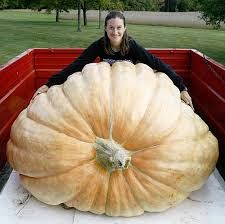
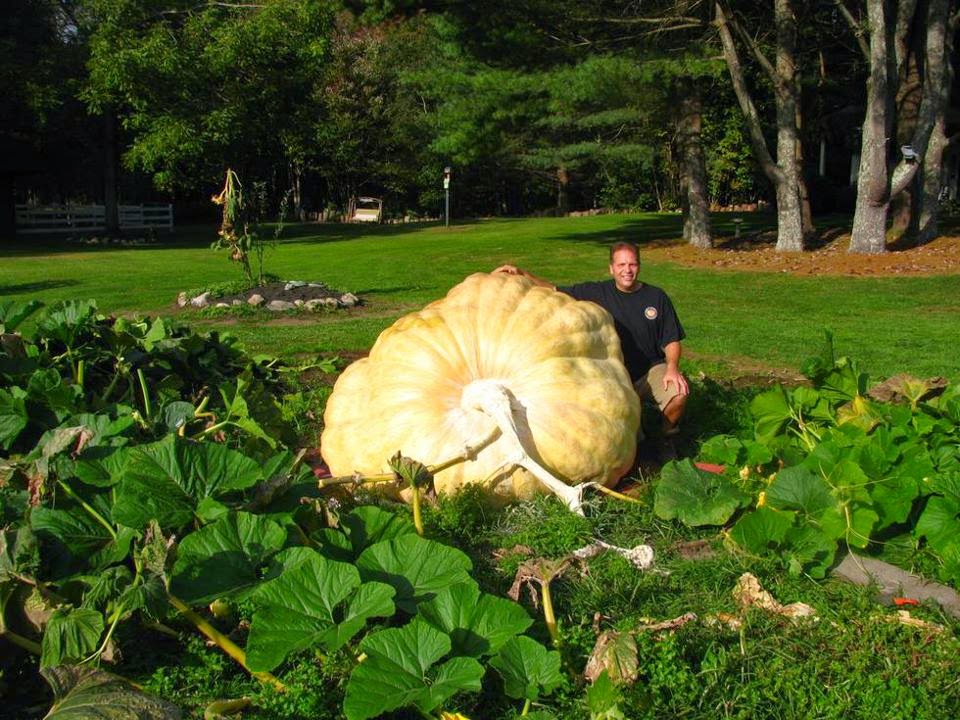
In Kristy Harps world record year I emailed with she and her husband Nick. Two very nice people and I got to meet them that following winter in Niagara and got to hear Kristy talk about her world record pumpkin. From Kristy's words it was apparent that the seed that grew the 1725 was something special. With all due respect to Kristy, you could tell it was more the seed than the grower that produced that massive pumpkin. She herself said at the seminar, "I'm not a heavy hitter." Which seemed kind of funny at the time because she was in a room with the best growers in the world declaring that she wasn't anything special but at the same time she had grown something bigger than anyone had ever come close to before. She knew she had grown something special.
That next year I grew the 1236 Harp which was pollinated by the world record plant. However, the 1236 didn't grow but one descent sized pumpkin that year and I ended up with an 800+ pound pumpkin. That seed didn't get the Kingly Line. What Kristy had done in her world record season was self pollinate or in other world pollinate the female flower with a male flower from the same plant and that turned out to be genius. She was criticize by some for doing it at the time. In the sport selfed pumpkins where definitely looked down upon at the time. Nobody would be criticizing her after the next few seasons however.
The next couple of seasons produced world record pumpkins, but they weren't from the Kingly Line. Which brings up a good point. There are probably hundreds of seeds each year that don't get planted or don't reach their potential that have world record genetics in them. The simple fact is that there are too many seeds produced to ever get planted and not enough plots.
Three seasons after Kristy's world record year Ron Wallace grew a 1789 pound pumpkin that he lost in August that was grown from the 1725 seed. The next season he planted another 1725 seed that produced one of the most memorable world records ever. The first one ton pumpkin at 2,009 pounds.
I got to see that world record plant in action and it was something special. A local grower got a cutting of that plant which was kept alive all winter in a greenhouse. The plant had bad powdery mildew and it just verily survived the shipping but once it kicked into gear you could tell it had something special in it.
The next season a new world record was grown from the 2009 seed. This last season a lot of 2009 seeds were grown along with 2009 crosses from the year before. 16 of the 20 biggest pumpkins grown in 2014 are from the Kingly Line 1725 Harp seed that Ron Wallace grew that produced the 2009. That includes the three world record breaking pumpkins that Beni Meier grew this last season, the biggest being from the 2009 seed itself at an amazing 2,102 pounds. Which by the way wasn't the biggest pumpkin ever grown by Beni. The year before he had grown a 2,323 pound pumpkin that he lost weeks before the weigh-off that was reported to still be packing on pounds when he lost it and it was grown from the 2,009 seed. The Kingly Line still lives on.
It should be noted here that people grow genetics that have been proven, so statistically speaking if a seed is grown more often it in all likelihood is going to produce bigger pumpkins just because more and better growers will be planting it. That isn't the case with the 2009 seed. Some people talk about grower techniques improving, but there hasn't been an improvement in techniques that I'm aware of that would make weights jump up hundreds of pounds for dozens of growers in just a couple of seasons. Statistically I don't remember a seed since the 1068 Wallace that has produced more big pumpkins consistently than the 2009. A 1700+ pound pumpkin just a few years ago astonished growers. This last season a 1600-1799 pound pumpkin is almost a footnote. There were 24 pumpkins just this last season that went to the scale that were over 1800 pounds. For a good part of the country weather was not that good for growing so what was produced is even more astonishing.
I got a 2009 Wallace seed from Ron and I didn't even ask for it. It was very kind of him to send. That next season I tried to start it and it was the only seed to not germinate which was disappointing.
This next season I plan to grow a 282 Scherber if Joe can get me a few. The 282 seed is a selfed pollination from the world record clone plant that I had mentioned previously. Joe grew a fantastic pumpkin from that seed this last year. The pumpkin was in state record territory when he lost it about 3 weeks before the weigh-off. It was very thick inside he said when he cut it open and estimated it could have ended up at 1,600 pounds but the pumpkin never made it to the scale.
I hope to create my own Kingly Line off that 282 seed this next season. The season after that I'll be growing some Barron seeds. If I had room for those they would go in patch this year. Very interesting cross of the 1730 Werner x 2009 Wallace.
Some interesting pumpkin seeds with that Kingly Line crossed into it can be found here as well as DVDs from world record Ron Wallace talking about his world record season. A must watch video.
In Kristy Harps world record year I emailed with she and her husband Nick. Two very nice people and I got to meet them that following winter in Niagara and got to hear Kristy talk about her world record pumpkin. From Kristy's words it was apparent that the seed that grew the 1725 was something special. With all due respect to Kristy, you could tell it was more the seed than the grower that produced that massive pumpkin. She herself said at the seminar, "I'm not a heavy hitter." Which seemed kind of funny at the time because she was in a room with the best growers in the world declaring that she wasn't anything special but at the same time she had grown something bigger than anyone had ever come close to before. She knew she had grown something special.
That next year I grew the 1236 Harp which was pollinated by the world record plant. However, the 1236 didn't grow but one descent sized pumpkin that year and I ended up with an 800+ pound pumpkin. That seed didn't get the Kingly Line. What Kristy had done in her world record season was self pollinate or in other world pollinate the female flower with a male flower from the same plant and that turned out to be genius. She was criticize by some for doing it at the time. In the sport selfed pumpkins where definitely looked down upon at the time. Nobody would be criticizing her after the next few seasons however.
The next couple of seasons produced world record pumpkins, but they weren't from the Kingly Line. Which brings up a good point. There are probably hundreds of seeds each year that don't get planted or don't reach their potential that have world record genetics in them. The simple fact is that there are too many seeds produced to ever get planted and not enough plots.
Three seasons after Kristy's world record year Ron Wallace grew a 1789 pound pumpkin that he lost in August that was grown from the 1725 seed. The next season he planted another 1725 seed that produced one of the most memorable world records ever. The first one ton pumpkin at 2,009 pounds.
I got to see that world record plant in action and it was something special. A local grower got a cutting of that plant which was kept alive all winter in a greenhouse. The plant had bad powdery mildew and it just verily survived the shipping but once it kicked into gear you could tell it had something special in it.
The next season a new world record was grown from the 2009 seed. This last season a lot of 2009 seeds were grown along with 2009 crosses from the year before. 16 of the 20 biggest pumpkins grown in 2014 are from the Kingly Line 1725 Harp seed that Ron Wallace grew that produced the 2009. That includes the three world record breaking pumpkins that Beni Meier grew this last season, the biggest being from the 2009 seed itself at an amazing 2,102 pounds. Which by the way wasn't the biggest pumpkin ever grown by Beni. The year before he had grown a 2,323 pound pumpkin that he lost weeks before the weigh-off that was reported to still be packing on pounds when he lost it and it was grown from the 2,009 seed. The Kingly Line still lives on.It should be noted here that people grow genetics that have been proven, so statistically speaking if a seed is grown more often it in all likelihood is going to produce bigger pumpkins just because more and better growers will be planting it. That isn't the case with the 2009 seed. Some people talk about grower techniques improving, but there hasn't been an improvement in techniques that I'm aware of that would make weights jump up hundreds of pounds for dozens of growers in just a couple of seasons. Statistically I don't remember a seed since the 1068 Wallace that has produced more big pumpkins consistently than the 2009. A 1700+ pound pumpkin just a few years ago astonished growers. This last season a 1600-1799 pound pumpkin is almost a footnote. There were 24 pumpkins just this last season that went to the scale that were over 1800 pounds. For a good part of the country weather was not that good for growing so what was produced is even more astonishing.
I got a 2009 Wallace seed from Ron and I didn't even ask for it. It was very kind of him to send. That next season I tried to start it and it was the only seed to not germinate which was disappointing.
This next season I plan to grow a 282 Scherber if Joe can get me a few. The 282 seed is a selfed pollination from the world record clone plant that I had mentioned previously. Joe grew a fantastic pumpkin from that seed this last year. The pumpkin was in state record territory when he lost it about 3 weeks before the weigh-off. It was very thick inside he said when he cut it open and estimated it could have ended up at 1,600 pounds but the pumpkin never made it to the scale.
I hope to create my own Kingly Line off that 282 seed this next season. The season after that I'll be growing some Barron seeds. If I had room for those they would go in patch this year. Very interesting cross of the 1730 Werner x 2009 Wallace.
Some interesting pumpkin seeds with that Kingly Line crossed into it can be found here as well as DVDs from world record Ron Wallace talking about his world record season. A must watch video.
Friday, April 18, 2014
An Attempt at Germinating a Hard to Germinate Seed
Today I am attempting to germinate my 119 Johnson seeds. Three previous attempts to germinate this seed during the winter failed. The 119 Johnson is a late season cross of my plant that grew my 1,220 pound pumpkin with the plant that grew the world record 2,009 pound pumpkin. I think it is a fantastic cross. Problem is that when the frost hit the pumpkin was young and although there was lots of seeds, the seeds hadn't fully filled out. At first appearance they look fully formed but they are light.
Joe was kind enough to offer me some gibberellic acid to help jump start the germinating process. I mixed that with a little alcohol (it needs a solvent in order to mix with water), humic acid, fulvic acid and a touch of liquid seaweed and then put that in water and let the first group of seeds soak for about 2 1/2 hours and the 2nd group of seeds soak for about 4 1/2 hours. I then wrapped the seeds in a lightly moist paper towel, put the paper towels in zip lock bags and put the seeds in a warm place (about 85 degrees). Hopefully in the next 5 days some of them will germinate. If they do I will grow that seed for sure as long as the plants don't look like duds.
So far every seed I've tried to start has germinated except for the 1791 Holland seed. I went ahead and removed that seed from the paper towel and put in its pot. I'm hoping that in about 5 days I'll see some signs of life.
Joe was kind enough to offer me some gibberellic acid to help jump start the germinating process. I mixed that with a little alcohol (it needs a solvent in order to mix with water), humic acid, fulvic acid and a touch of liquid seaweed and then put that in water and let the first group of seeds soak for about 2 1/2 hours and the 2nd group of seeds soak for about 4 1/2 hours. I then wrapped the seeds in a lightly moist paper towel, put the paper towels in zip lock bags and put the seeds in a warm place (about 85 degrees). Hopefully in the next 5 days some of them will germinate. If they do I will grow that seed for sure as long as the plants don't look like duds.
So far every seed I've tried to start has germinated except for the 1791 Holland seed. I went ahead and removed that seed from the paper towel and put in its pot. I'm hoping that in about 5 days I'll see some signs of life.
Thursday, November 28, 2013
1220 & 695 Johnson Root Systems
I did some test plantings of the 1220 Johnson (1421 Stelts x 220 Debacco) & 695 Johnson (1775 Starr x 1725 Harp) seeds a few weeks ago. Today I took the plants out of their pots to see what the root systems looked like on them. The 695 plant (the pollinator was the world record plant that grew the 2,009lb pumpkin) which is on the left hand side of the picture is a week younger but you'll note it has a nice looking root system with some very large roots at the bottom. The 1220 equally has a nice looking root system (pollinator was the 220 Debacco) and the plant was a very nice looking, stocky plant that grew quickly. I think these seeds could do well this year.
Sunday, October 13, 2013
How to Choose the Right Giant Pumpkin Seed
Forest Gump once said, "Life is like a box of chocolates. You never know what you are going to get inside." Unfortunately Atlantic Giant pumpkin seeds tend to be kind of the same. Each seed in a pumpkin is a child. And just like children in any family they all look different. Often there tends to be some similar traits among the group but each child are different sizes shapes and may have different coloring.
Three years ago the world-record pumpkin was grown from a 1161 Rodonis. That same year I grew a 1161 Rodonis. Chris's world record pumpkin was 1,810 pounds and went very heavy to the charts. My pumpkin was 868 pounds and went 9% light to the charts. Both pumpkins had a similar shape and color but mine didn't get the same kind of "grow" gene that Chris got.
This last year my big pumpkin weighed 400 pounds more than my smaller pumpkin. Each plant got the same fertilizer, soil and watering. The smaller pumpkin just didn't have the genetics to grow.
When you pollinate a pumpkin the pollination doesn't affect how big the pumpkin will grow. The genetics that are passed only affects the seeds that would be grown the next year. Knowing the parents of a pumpkin seed can help you guess which seed to grow. There is a great website called http://tools.pumpkinfanatic.com that allows you to see the family trees and progeny for a given pumpkin seed. Once you start to become familiar with some of the main seeds (1725 Harp, 1161 Rodonis, 1421 Stelts, 1385 Jutras) you start to see a pattern where most of the big pumpkins came from. Most of the biggest pumpkins have either a 1068 Wallace, 998 Pukos or 1231 Pukos (which is the reverse cross of the 998) in their genealogy. I usually try to grow from those lines and particularly from the world record lines from those seeds. The good news is that there are a lot of seeds out there with those lines in them.
It is important to understand how seeds are named. The number at the beginning of the seed name (i.e. 1421) is the weight of the pumpkin that the seed came from. The name that follows (Stelts) is the name of the grower that grew the seed. So the 1421 Stelts (1385 Jutras x 904 Stelts) would tell you that the seed came from a pumpkin that weighed 1421 pounds. The pumpkin that the 1421 came from weighed 1,385 pounds (this is the mother) and the pollinator came from a pumpkin that weighed 904 pounds (this is the father). So from the seed name and the cross you can get a fair amount of information.
There are some terms you should be familiar with and how they affect the next generation of seeds. One is Self and the other is Sibb. A selfed seed is where the pollinator for the pumpkins is itself. At one time selfed seeds were looked down upon until Christy Harp smarley selfed her world record pumpkin. From that seed the first one-ton pumpkin was grown and a number of giants. A sibb cross is where a plant from the same seed is crossed together. A selfed and sibbed seed does not have the same genetics as the parent seed. I grew a 1775 Starr seed this year. It was a selfed seed from a 1725 Harp seed. My pumpkin weighed almost 1,000 pounds less than the parent it came from was a dark orange color (parent was pale orange) but had the exact same shape as the parent. Some traits from the parent came through in my seed and others did not.
This year I got kind of lucky in two ways. A local grower (Joe) was able to get a cutting (sometimes called a clone) of the plant that grew the world record the year before. What they do to get these cuttings is they get a vine on the plant to root in a pot and then keep that cutting of the plant going during the winter in a green house. Matt DeBacco, who did the clones last year, grew the cutting during the winter and was able to pollinate it with a plant that grew from a seed from the world record pumpkin. Joe also got a seed from that pumpkin. That seed was the 220 DeBacco (1725 Harp x 2009 Wallace). In theory that 220 DeBacco should have a lot of the big growing genetics of the world record. This season that proved out some with two pumpkins grown from the 220 DeBacco growing over 1,700 pounds.
My big pumpkin was pollinated with the 220 DeBacco so it is 1421 Stelts x 220 DeBacco. When my pumpkin split I decided to pollinate some pumpkins on the 1421 plant with the the cutting/clone (1421 Stelts x 1725 Harp). I just harvested the seeds from the pumpkins on the 1421 plant. The darker color seed comes from the big pumpkin pollinated with the 220 DeBacco. The lighter color seed comes from a pumpkin pollinated with the clone (1725 Harp) late in the season. I found it interesting that although the size and shape of the seeds were the same the coloring was completely different. Even though the 220 DeBacco is 75% the same genetics as the 1725 Harp world record the differences in genetics is already showing up in the seeds. This means there will also be differences in the pumpkins and plants.
So far this year seeds that were either from or pollinated by the world record have grown 6 pumpkins over 1,500 pounds. One was a world record and another was 300 pounds more than the world record but it split so it was disqualified. The fact that I put the same genetics into my 1421 plant as well as my 1775 Starr plant I hope will prove out the same results for growers next year.
So how to choose the best pumpkin seed? I would look at the parents and at the progeny of those parents and see how well a particular seed tends to grow if there is data available. Also look at the shape of the parents and progeny and see what they look like. Pumpkins with deep ribs and tall pumpkins tend to split more often so you are a little safer trying to grow pumpkins that are long and less ribby. Try to grow from genetic lines that tend to grow bigger pumpkins. And then hope and pray you picked the right seed and did everything you could to let it grow a pumpkin that matches its genetic potential. Good luck next year. I should have my seeds from this year available in November.
Three years ago the world-record pumpkin was grown from a 1161 Rodonis. That same year I grew a 1161 Rodonis. Chris's world record pumpkin was 1,810 pounds and went very heavy to the charts. My pumpkin was 868 pounds and went 9% light to the charts. Both pumpkins had a similar shape and color but mine didn't get the same kind of "grow" gene that Chris got.
This last year my big pumpkin weighed 400 pounds more than my smaller pumpkin. Each plant got the same fertilizer, soil and watering. The smaller pumpkin just didn't have the genetics to grow.
When you pollinate a pumpkin the pollination doesn't affect how big the pumpkin will grow. The genetics that are passed only affects the seeds that would be grown the next year. Knowing the parents of a pumpkin seed can help you guess which seed to grow. There is a great website called http://tools.pumpkinfanatic.com that allows you to see the family trees and progeny for a given pumpkin seed. Once you start to become familiar with some of the main seeds (1725 Harp, 1161 Rodonis, 1421 Stelts, 1385 Jutras) you start to see a pattern where most of the big pumpkins came from. Most of the biggest pumpkins have either a 1068 Wallace, 998 Pukos or 1231 Pukos (which is the reverse cross of the 998) in their genealogy. I usually try to grow from those lines and particularly from the world record lines from those seeds. The good news is that there are a lot of seeds out there with those lines in them.
It is important to understand how seeds are named. The number at the beginning of the seed name (i.e. 1421) is the weight of the pumpkin that the seed came from. The name that follows (Stelts) is the name of the grower that grew the seed. So the 1421 Stelts (1385 Jutras x 904 Stelts) would tell you that the seed came from a pumpkin that weighed 1421 pounds. The pumpkin that the 1421 came from weighed 1,385 pounds (this is the mother) and the pollinator came from a pumpkin that weighed 904 pounds (this is the father). So from the seed name and the cross you can get a fair amount of information.
There are some terms you should be familiar with and how they affect the next generation of seeds. One is Self and the other is Sibb. A selfed seed is where the pollinator for the pumpkins is itself. At one time selfed seeds were looked down upon until Christy Harp smarley selfed her world record pumpkin. From that seed the first one-ton pumpkin was grown and a number of giants. A sibb cross is where a plant from the same seed is crossed together. A selfed and sibbed seed does not have the same genetics as the parent seed. I grew a 1775 Starr seed this year. It was a selfed seed from a 1725 Harp seed. My pumpkin weighed almost 1,000 pounds less than the parent it came from was a dark orange color (parent was pale orange) but had the exact same shape as the parent. Some traits from the parent came through in my seed and others did not.
This year I got kind of lucky in two ways. A local grower (Joe) was able to get a cutting (sometimes called a clone) of the plant that grew the world record the year before. What they do to get these cuttings is they get a vine on the plant to root in a pot and then keep that cutting of the plant going during the winter in a green house. Matt DeBacco, who did the clones last year, grew the cutting during the winter and was able to pollinate it with a plant that grew from a seed from the world record pumpkin. Joe also got a seed from that pumpkin. That seed was the 220 DeBacco (1725 Harp x 2009 Wallace). In theory that 220 DeBacco should have a lot of the big growing genetics of the world record. This season that proved out some with two pumpkins grown from the 220 DeBacco growing over 1,700 pounds.
So far this year seeds that were either from or pollinated by the world record have grown 6 pumpkins over 1,500 pounds. One was a world record and another was 300 pounds more than the world record but it split so it was disqualified. The fact that I put the same genetics into my 1421 plant as well as my 1775 Starr plant I hope will prove out the same results for growers next year.
So how to choose the best pumpkin seed? I would look at the parents and at the progeny of those parents and see how well a particular seed tends to grow if there is data available. Also look at the shape of the parents and progeny and see what they look like. Pumpkins with deep ribs and tall pumpkins tend to split more often so you are a little safer trying to grow pumpkins that are long and less ribby. Try to grow from genetic lines that tend to grow bigger pumpkins. And then hope and pray you picked the right seed and did everything you could to let it grow a pumpkin that matches its genetic potential. Good luck next year. I should have my seeds from this year available in November.
Tuesday, October 1, 2013
Elbert is Still Growing Along with the Clone Pollinations
Last Friday night we had a light frost at the house. Interesting enough the leaves under the hail netting were partially spared but leaves that were just outside of the hail netting are all black now. On Sunday I took a measurement of the 1775 Starr pumpkin (Elbert) and this morning I took another measurement and it is still growing. I expected this pumpkin to go light even before I planted the seed and I still expect that. I'm just hoping that it will exceed the weight of my rookie year pumpkin. This pumpkin was never a fast grower but is still pushing 6lbs a day right now.
I also checked the late pollinations that I did on the 1421 plant where I pollinated each pumpkin with a cutting (clone) from the plant that grew the world-record 2,009 pound pumpkin last year. Pumpkins that have those world record genetics in them that have gone to the scale so far this year have been big. My first pollination is only 30 days old but both pumpkins are still growing. I need to get to about 45 days to assure viable seeds. However, Friday night of this week has a forecast for a hard freeze. If that is the case I'll take the pumpkins off the vine and put them in the garage for a week. I've heard that the seeds can still mature some after the pumpkins are taken off the vine.
Saturday, June 29, 2013
A Big Thanks to Joe for the World Record Pollen
| World Record Pollen |
| 1775 Pumpkin |
One of the great things about crossing with a clone is that you know the traits of the plant and how big of a pumpkin it can grow. Many a grower has lamented which of their plants they crossed with each other because sometimes you have a plant that grew a massive pumpkin that you crossed with a dude of a plant. Crossing with a clone takes the guessing out of your crosses.
![]() |
| World Record Pumpkin |
First, I'm hoping that this pollination takes. Second I'm hoping I can grow a big pumpkin on the 1775. Third I'm hoping that from this cross I can get the genes for the height of the 2009 and the width of the 1775 to get a very special pumpkin.
Yesterday I noticed some green algae on the soil. With three days of 95+ degrees I nearly doubled the water so the soil has been wet. This evening I gave both of the pumpkin plants some BiotaMax, Actinovate and Azos to help kill any bad stuff that might be trying to grow in the soil.
Sunday, April 7, 2013
The Start of the Great Pumpkin
Pumpkin growing is a lot like Major League Baseball. Each spring hope springs anew. Usually by the All-star break you know if you have a player and then come September first you are planning for the playoffs or you already are talking about next season.
Pictured here are the seed packets for this seasons starters. At this point you hope you look back at this post in October and say, "I'm sure glad I grew that seed." I like the genetics in these seeds. I'll take my two best 1775 plants and put them in one hoop house and put the 1421 and 1789 in the other. The kids will grow the 1799.
Going into this season my mind was set on the 1421. Now I'm not so sure. Talking with Thad Starr today he said that Quinn Werner said to not grow genetics more than three years old. That actually makes good sense. The 1421 has grown a lot of big pumpkins. Probably statistically the 3rd best seed all-time for progeny. However with all of the seeds that have been planted the biggest that it has grown is in the 1600 pound range. The 1789 has pumpkins 200 lbs larger however. When you look across all the pumpkins it isn't grower techniques that is pushing the weights up every year. Every 3-4 years the genetics have gotten so much better that it is making the older seeds obsolete. The 1421 is now 4 years old.
We will see what the plants look like and then make our decision. This year I'm not going to go by plant vigor when making my decision. I'm going to look at the plant traits and see which plant that looks the most like the parent plant that I want and then go with that. Too often you hear world record holders say that the plant that grew the big one wasn't their best looking plant early on.
Pictured here are the seed packets for this seasons starters. At this point you hope you look back at this post in October and say, "I'm sure glad I grew that seed." I like the genetics in these seeds. I'll take my two best 1775 plants and put them in one hoop house and put the 1421 and 1789 in the other. The kids will grow the 1799.
Going into this season my mind was set on the 1421. Now I'm not so sure. Talking with Thad Starr today he said that Quinn Werner said to not grow genetics more than three years old. That actually makes good sense. The 1421 has grown a lot of big pumpkins. Probably statistically the 3rd best seed all-time for progeny. However with all of the seeds that have been planted the biggest that it has grown is in the 1600 pound range. The 1789 has pumpkins 200 lbs larger however. When you look across all the pumpkins it isn't grower techniques that is pushing the weights up every year. Every 3-4 years the genetics have gotten so much better that it is making the older seeds obsolete. The 1421 is now 4 years old.
We will see what the plants look like and then make our decision. This year I'm not going to go by plant vigor when making my decision. I'm going to look at the plant traits and see which plant that looks the most like the parent plant that I want and then go with that. Too often you hear world record holders say that the plant that grew the big one wasn't their best looking plant early on.
Friday, July 6, 2012
2nd Chance Pumpkin
I pollinated a female flower at about 16 feet this morning on the 1451 plant with pollen from a very nice looking 1451 that Joe Scherber has. I'm really hoping this one takes because we are already 2 days past the latest I like to do pollinations. We are 85 days from the first weigh-off at Jared's Nursery and I typically like at least 90 days of growth on a pumpkin. Although there are also weigh-offs 92 and 99 days out that I can also take my pumpkins to so if this one will grow we do have options.
The female that was developing on the 1789 never fully developed and aborted. I've got about 12 feet of patch left that I can fun that main down so I'm still hoping for a late fruit set. If I don't get one to set then I'll make that plant a seed plant setting a couple fruit on the side vines.
I gave the plants some calcium this evening along with a little Big Bloom.
Wednesday, February 1, 2012
Grateful
I got an envelope from a grower today. Opening it was like Christmas. Not only did I receive the seed that I wanted but an additional one that I have to admit I was also coveting but wasn't expecting. One of those two seeds will be going in the ground this year. I am grateful for kind giant pumpkin growers everywhere that have taught me a lot. Also grateful for a great club like the RMGVG with members and a President that work so hard to make some great weigh-offs.
Sunday, October 9, 2011
Heavy to the Charts and it Has Clone Genetics in the Pumpkin
My son and I took a small pumpkin from the 868 pumpkin plant that popped up sometime after my main pumpkin ("Jerry") went down to rot to the weigh-off at Nick's Nursery yesterday. The pumpkin was probably about 30 days old and pretty good sized for it's age. I always wondered if Jerry was going to go heavy to the charts and I figured this was the best way to find out since it never made it to the scale. Jerry thumped like he was heavy so I took this little pumpkin to give me a ball park idea of what this 868 plant could produce. To my surprise the little pumpkin went 15% heavy (aka abnormally heavy) to the charts! Now I really wish that Jerry would have had a chance to go to the scales to see what that pumpkin could have done. From the start it was the fastest growing pumpkin I ever had but for some reason it slowed down at the beginning of August and by the third week it rotted out. I wonder now if there wasn't something more than the one spot of rot that I found because that pumpkin completely rotted out very quickly.
About a month ago I pollinated the 868 plant with a clone plant that came from the same plant that produced a 1,725 pound pumpkin. On paper that is a very interesting cross. The genealogy of this pumpkin that I cut off the vine yesterday is that it has three generations of 1161 Rodonis in it. The first Rodonis weighed 1,579 pounds. The second Rodonis weighed 868 pounds. The third Rodonis weighed 1,725 pounds. Genetics wise it is 87% 1161 Rodonis which in my book isn't a bad thing. Since the last pumpkin went 15% heavy who knows what this pumpkin's seeds might produce.
Saturday, September 24, 2011
A New Personal Best Pumpkin at 924.5 Pounds
Last night we cut the pumpkin from the vine and much to my surprise and relief the bottom of the pumpkin hadn't rotted out. This morning I hauled my pumpkin and the kids pumpkin to the weigh-off at Jared's Nursery. Hauling a giant pumpkin is a real hoot. People wave, honk their horns and take pictures the entire way to the weigh-off. 364 days a year you can get teased some for being a giant pumpkin grower. Let's face it, the cool crowd on South Beach don't spend a lot of time growing giant pumpkins. But on the 365th day Heidi Klum could be standing next to a nice, orange giant pumpkin and people might not even notice her. Pumpkin weights this year were way down in Colorado because many growers lost pumpkins due to rot and splits this year but there was still a good number of pumpkins at the weigh-off. My children took first place with a 146.5 pound pumpkin in the children's division. They did a very good job of taking care of their pumpkin this year. Later my pumpkin was weighed and came in at 924.5 pounds. A new personal best! Not as big as I thought it would be this year (after the pumpkin split the pounds went from 20 down to about 7 per day) but it is still the biggest and best looking pumpkin I've ever grown (let Jerry Seinfeld know that giants don't have to be ugly). Overall my pumpkin would have been in 2nd place for weight and won the Howard Dill award for the prettiest pumpkin but it was disqualified because of the splits. It looks like my pumpkin may end up being the heaviest Colorado grown pumpkin this year (Joe Scherber lost his 1,475 pound pumpkin last week due to rot) that goes to the scale. 

Top honors for the day went to Ron Hoffman of Wyoming with a nice 1,012 pound pumpkin. I was very happy for Ron. He is a great grower and deserves the win. A well deserved second prize went to Gary Grande who beat out his brother by nine pounds.
Got the seeds out of my pumpkin tonight. Not a ton of them because of some rot that had started inside but I was happy to see some at all. These seeds are now officially the 924.5 Johnson (1204 Scherber x 1810 Stevens).
Saturday, September 17, 2011
Another Big One that Got Away
Saturday, September 3, 2011
The 656 Johnson AKA Jerry
I took the final measurements on "Jerry" today because I will be cutting it open to get the seeds out. The 868 measures 142 inches in circumference and has an estimated weight of 656 pounds. So now the pumpkin (pictured below) will be known as the 656 Johnson (868 Johnson x 1725 Harp).


Monday, June 27, 2011
Pumpkin Porn & The Truth About Pollination
Much was made on the show yesterday about pumpkin pollination. Most giant pumpkin growers don't let the bees do the pollination because they want to control the genetics. One of the reasons the world record 1810 pound pumpkin is in existence is because pumpkin growers have been breeding the pumpkins to get bigger and bigger.
The term "pumpkin porn" was first penned by my wife in one of her popular mommy blogs (it was one of her most popular blog posts ever). Although it didn't have much to do with pollination it is one of the things that my wife likes to give me a hard time about because I always tell her that we can't do the family vacations around pollination time.
You may want to overt your eyes because tomorrow (I wouldn't be suprised to see Ricky Gervais peaking over the fence. I'm guessing he is a watcher.) is pollination day for the 1204 Scherber plant. Today I got some male flowers from a local grower who has a 1810 Stevens pumpkin plant (a plant grown from a seed taken from the World Record 1,810 pound pumpkin). If the pollination takes then the pumpkin will start growing and at the end of the season I hope to have some great pumpkin seeds with the genetics from the 1810 plant and my 1204 plant mixed together.
I gave the plants some foliar compost tea today along with some CalCarb and calcium.
Subscribe to:
Posts (Atom)