Next 30 days is going to be busy. I got soil samples from the patches, now that the snow is gone, that is drying and then I'll send into the lab this week. When I get my soil test results back I'll then amend the patches around mid-April and then I'll then start heating up the soil in preparation for planting around the first week of May. Today I'm starting some pumpkin seeds, but these won't be the plants that I'll grow. I've put some myco and azos into a pot. This will be used to get the myco maturing early and I'll then transfer that myco to the pots of the plants I'll grow in two weeks. The seeds I'm starting now will feed the myco until it is transferred into the new pots.
April 13th will be my seed starting date. Once I get the greenhouse figured out I'll maybe start seeds earlier in future years, but with a last frost date around the last week of May, I have a fine balance between giving the plants as much growing time as possible and giving the plants the best growing environment. So this year I'm going to play it more on the safe side. For everything else I'm going to put the pedal to the floor this year.
One thing that amazed me this last week was the growth of the winter rye. Last fall I sowed winter rye seed in the non-greenhouse patch, just as the weather started getting cold. Two weeks later in the greenhouse I sowed winter rye and a week later I had it popping up. The other patch I never saw the grass sprout at all. Eventually the outdoor patch was covered in snow and we got a lot of snow this year that stuck around all winter. Maybe three feet deep at its deepest. Last week the snow was still at least a foot deep in the outdoor patch so I cut some 2 foot wide holes in the snow in the hopes I could get some spots to dry out faster so I could get soil samples this week. The last two inches I couldn't dig out, because it was all ice.
The beginning of this week those holes melted out even though the surrounding areas still had 4-5 inches of snow on them. What surprised me was to see the winter rye popping up in the holes I had cut, even though everything around it was still solid ice/snow. Now the outdoor patch is greening up everywhere nicely. I'll till the planting areas in both patches in two weeks, to get the grass breaking down before planting. The rest of the grass I'll let grow with a few mowing as long as I can (probably late June to early July).
The greenhouse grass isn't very tall at all. Deer have mowed it short. I didn't get much water in the greenhouse this winter. Hose froze in the snow (silly me for leaving it out), so once every two weeks I'd shovel a bunch of snow in the greenhouse to keep it going. With the warmer weather now I can see it starting to take off with the regular irrigation.

Learn How to Grow a Giant Pumpkin. Competition Giant Pumpkin Seeds, Fertilizers & Growing Tips from Jamie 'The Pumpkin Man'. The Most Read Extreme Gardening, Pumpkin Blog in the World.
Saturday, March 30, 2019


Wednesday, March 27, 2019
Soil Prep Time & Time for Amendments in the Pumpkin Patch
This is an excerpt from a write up posted by Soil Scientist John P. Taberna. In my opinion John is the leading soil scientist in the area of giant pumpkin growing and might be the best for western soil farmers period. He is one of the few that has done some research on giant pumpkin growing and as such is a wealth of knowledge. The following are his fertilizer recommendations. The numbers he is quoting is the total amount in the soil and not the total amount to add: John's recommendations:
Phosphorus (P)
The lab recommends 4 pounds of Phosphate per 1000 square feet. You're going to use 1152 Ammonium Phosphate. CALCULATION: 1 x .52 = .52 pounds of Phosphate per pound of 1152.4 pounds of recommendation / .52 = 7.69 pounds per 1000 square feet. If you take example 1 (1.925) x 7.69 = 14.80 pounds of Phosphate per garden. 1152 also contains 11% Nitrogen. CALCULATION: 1 x .11 = .11 x 7.69 pounds = 85 Nitrogen per 1000 square feet. Nitrogen (N) The lab suggests 3.5 pounds of Nitrogen. Never apply more than 1 pound of Nitrogen when using Ammonium Sulfate. Never apply 1.5 pounds Nitrogen when using other Nitrogen products. If you take example 3, by using 1152 you’re adding .85 pounds of Nitrogen per 1000 square feet already. If you added one pound of Uriah per thousand you’d be adding an additional .46 pounds N per 1000 square feet. If you add the two together you’ve added 1.31 pounds per 1000 square feet, which is okay.
Potash (K20)
The lab recommends six pounds of Potash per 1000 square feet. The best source for pre-plant K is 0-0-50 Potassium Sulfate. You will need to apply 12 pounds 0-0-50 to get 5 pounds per 1000 square feet. Two pounds of Potassium Sulfate equals one pound of K2. You would apply 12 pounds every 1000 square feet to meet the 6 pound recommendation. During midseason, if you notice marginal burning, add 2 pounds of 0- 0-60 Potassium Chloride per 1000 square feet and thoroughly water with overhead irrigation. This would equal 1.2 pounds of K20. Potassium was the biggest deficiency from midseason on for Ron Wallace when he hit the 2,009-pound giant pumpkin. Sulfur (S) All products suggested contain Sulfur. There is no need to add more.
Magnesium (Mg)
The lab recommends 0.7 pounds of Magnesium. Epsom Salt is the easiest to find and it contains 10% Mg. 0.7 pounds/0.1= 7 pounds Epsom Salt to apply per 1000 sq. ft. When burying the vines, always add ½ teaspoon of Epsom Salt. Be sure to thoroughly mix. When drenching, add ½ teaspoon Epsom Salt to the drench. During midseason, if you see mottling and blistering, foliar spray 1 teaspoon per plant twice a week. If you can find the product Kmag, this would satisfy the K, Mg and S needs. Add 1 teaspoon to foliar or drench per week per plant.
Calcium (Ca)
If you are having blossom end rot or collapsing of the pumpkin, it’s generally related to Calcium, Boron and Potassium. After pollination, when you’re burying the vines; add 1 heaping teaspoon Gypsum, 1 level teaspoon 0-0-50 and ½ teaspoon borax each time. Don’t forget to thoroughly mix with your mycorrhiza, peat moss and other secret amendments. Also, don’t forget Taberna’s Secret Formula to stimulate bacteria and beneficial fungal growth: 2 cans of beer, 2 multivitamins, 2 aspirins, then pee in the hole after waiting an hour. This is a man’s thing that naturally occurs in the backyard, so if you are a gal raising giants… put your significant other to work!
Micronutrients
When pre planting, it’s best to use Metallic Sulfate materials. It’s been found that sulfated forms of micronutrients retard onset fungal diseases.
Zinc (Zn)
The lab recommends 2 oz. of Zinc per 1000 and you are using Zinc Sulfate which contains 36% of Zn. 2/.36=5.6 ounces Zn to apply per 1000.
Manganese (Mn)
The lab recommends 1.5 oz. of Manganese. Manganese Sulfate is 24% Mn. 1.5/.24=6.3 oz. per 1000.
Copper (Cu)
The lab recommends .7 Copper. Copper Sulfate contains 25% Cu. 0.7/.25=2.8 oz. Copper Sulfate per 1000.
Boron (B)
If Boron is recommended, it’s best to foliar or drench with 1 tablespoon of Borax. When burying the vine, don’t go over ½ tablespoon of Borax.
In season when you’re applying micronutrients, use chelated products. Some examples are amino acid chelates, or citric acid chelates. I suggest buying individually and not taking the shot gun approach. Fancy EDTA materials are fantastic but very poor for foliar application. EDTA is stable at any pH for 2 months in soil. These materials are prone to leeching. Giant pumpkin and melon growers tend to water heavily and may leach expensive chelated below the effective root zone. The amino acid and citric acids are readily absorbed by plant tissue. It also wouldn’t hurt to add 1-teaspoon product to vine burial mix.
Phosphorus (P)
The lab recommends 4 pounds of Phosphate per 1000 square feet. You're going to use 1152 Ammonium Phosphate. CALCULATION: 1 x .52 = .52 pounds of Phosphate per pound of 1152.4 pounds of recommendation / .52 = 7.69 pounds per 1000 square feet. If you take example 1 (1.925) x 7.69 = 14.80 pounds of Phosphate per garden. 1152 also contains 11% Nitrogen. CALCULATION: 1 x .11 = .11 x 7.69 pounds = 85 Nitrogen per 1000 square feet. Nitrogen (N) The lab suggests 3.5 pounds of Nitrogen. Never apply more than 1 pound of Nitrogen when using Ammonium Sulfate. Never apply 1.5 pounds Nitrogen when using other Nitrogen products. If you take example 3, by using 1152 you’re adding .85 pounds of Nitrogen per 1000 square feet already. If you added one pound of Uriah per thousand you’d be adding an additional .46 pounds N per 1000 square feet. If you add the two together you’ve added 1.31 pounds per 1000 square feet, which is okay.
Potash (K20)
The lab recommends six pounds of Potash per 1000 square feet. The best source for pre-plant K is 0-0-50 Potassium Sulfate. You will need to apply 12 pounds 0-0-50 to get 5 pounds per 1000 square feet. Two pounds of Potassium Sulfate equals one pound of K2. You would apply 12 pounds every 1000 square feet to meet the 6 pound recommendation. During midseason, if you notice marginal burning, add 2 pounds of 0- 0-60 Potassium Chloride per 1000 square feet and thoroughly water with overhead irrigation. This would equal 1.2 pounds of K20. Potassium was the biggest deficiency from midseason on for Ron Wallace when he hit the 2,009-pound giant pumpkin. Sulfur (S) All products suggested contain Sulfur. There is no need to add more.
Magnesium (Mg)
The lab recommends 0.7 pounds of Magnesium. Epsom Salt is the easiest to find and it contains 10% Mg. 0.7 pounds/0.1= 7 pounds Epsom Salt to apply per 1000 sq. ft. When burying the vines, always add ½ teaspoon of Epsom Salt. Be sure to thoroughly mix. When drenching, add ½ teaspoon Epsom Salt to the drench. During midseason, if you see mottling and blistering, foliar spray 1 teaspoon per plant twice a week. If you can find the product Kmag, this would satisfy the K, Mg and S needs. Add 1 teaspoon to foliar or drench per week per plant.
Calcium (Ca)
If you are having blossom end rot or collapsing of the pumpkin, it’s generally related to Calcium, Boron and Potassium. After pollination, when you’re burying the vines; add 1 heaping teaspoon Gypsum, 1 level teaspoon 0-0-50 and ½ teaspoon borax each time. Don’t forget to thoroughly mix with your mycorrhiza, peat moss and other secret amendments. Also, don’t forget Taberna’s Secret Formula to stimulate bacteria and beneficial fungal growth: 2 cans of beer, 2 multivitamins, 2 aspirins, then pee in the hole after waiting an hour. This is a man’s thing that naturally occurs in the backyard, so if you are a gal raising giants… put your significant other to work!
Micronutrients
When pre planting, it’s best to use Metallic Sulfate materials. It’s been found that sulfated forms of micronutrients retard onset fungal diseases.
Zinc (Zn)
The lab recommends 2 oz. of Zinc per 1000 and you are using Zinc Sulfate which contains 36% of Zn. 2/.36=5.6 ounces Zn to apply per 1000.
Manganese (Mn)
The lab recommends 1.5 oz. of Manganese. Manganese Sulfate is 24% Mn. 1.5/.24=6.3 oz. per 1000.
Copper (Cu)
The lab recommends .7 Copper. Copper Sulfate contains 25% Cu. 0.7/.25=2.8 oz. Copper Sulfate per 1000.
Boron (B)
If Boron is recommended, it’s best to foliar or drench with 1 tablespoon of Borax. When burying the vine, don’t go over ½ tablespoon of Borax.
In season when you’re applying micronutrients, use chelated products. Some examples are amino acid chelates, or citric acid chelates. I suggest buying individually and not taking the shot gun approach. Fancy EDTA materials are fantastic but very poor for foliar application. EDTA is stable at any pH for 2 months in soil. These materials are prone to leeching. Giant pumpkin and melon growers tend to water heavily and may leach expensive chelated below the effective root zone. The amino acid and citric acids are readily absorbed by plant tissue. It also wouldn’t hurt to add 1-teaspoon product to vine burial mix.
Friday, March 22, 2019
Yea. Greenhouse is Wired Up!
A little excited. The greenhouse is wired up now with power. Those electrical plugs will be connected to smart plugs which will control fans and watering system. I'm hoping and plan in the next three weeks to have everything in place and I'll post a little video on how to automate your growing on the cheap.
Tuesday, March 19, 2019
Steve Deletas Giant Pumpkin Watering Presentation
Steve Deletas has consistently been one of the best growers in the world for a lot of years. As a profession he is a pilot, so he is away a lot. Because of this he has come up with an automated watering system to make sure his plants get the perfect amount of water all the time. I met Steve a number of years back. A very nice guy. The following is his presentation this last weekend at the GPC spring seminar.
Saturday, March 9, 2019
2019 Giant Pumpkin Fertilizer Program
In 2018 I cut back some on the usage of seaweed in my fertilizer program. After a discussion with a scientist at the Utah Giant Pumpkin Grower Spring meeting today, I'm putting it back in, but mostly on the soil. This scientist talked about keeping the roots young and seaweed is a good way to do that. Seaweed can encourage root hair elongation/growth and root hairs typically will only last about two weeks. Foliar application effects a plant much differently than soil applications. So in 2019 I'm going to do more soil applications and less foliar applications.
One interesting part of the presentation was this chart. In a lot of ways it nicely matches what I've been trying to do with my fertilizer program. The right fertilizers at the right time for the greatest impact. The following chart shows this from the presentation:
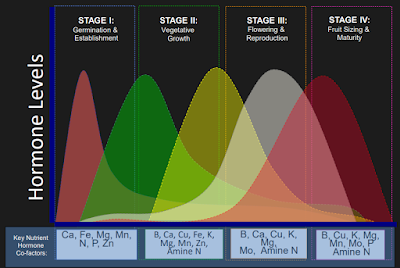
The following is the 2019 fertilizer program I'll be using:
One interesting part of the presentation was this chart. In a lot of ways it nicely matches what I've been trying to do with my fertilizer program. The right fertilizers at the right time for the greatest impact. The following chart shows this from the presentation:

The Amine N is basically urea form of nitrogen.
Another interesting part of the discussion I had was urea verses ammonium sulfate for nitrogen. By the end of the discussion my conclusion was that for soil applications, sulfur coated urea is a little bit better way to go.
Also enjoyed Ralph's presentation today. He had shared a lot of what he presented with me previously, but pulled away with some new ideas as well. Basically I'll be doing much more soil testing this year of dissolved solids (NPK) to make sure the nutrients are staying within the 500-900 range. I know I've been too low in the past.
The following is the 2019 fertilizer program I'll be using:
| May (focusing on the roots): | |
| Week 1 | RAW Phosphorous/nitrogen (mono ammonium), B-vitamin, liquid seaweed/kelp, compost tea, myco, microbes & Azos, yucca, humic acid |
| Week 2 | fish, compost tea (alfalfa), fulvic acid, yucca, silica, seaweed, humic acid, foliar multimineral |
| Week 3 | NPK, compost tea, humic acid, yucca, fish, Azos, enzymes, amino acids, iron |
| Week 4 | NPK, compost tea, RAW 7-4-5, Omina, silica, fulvic acid, seaweed, calcium |
June (focus on vine growing): | |
| Week 5 | blood meal (for nitrate nitrogen), phosphorus, potassium, enzymes, humic acid, compost tea, yucca, RAW 7-4-5, azos |
| Week 6 | foliar multi-mineral, phosphorous (flowering), fulvic acid, microbes, RAW 7-4-5, azos |
| Week 7 | (pollination) humic acid, compost tea, RAW 3-12-12, Omina, iron, azos |
| Week 8 | nitrogen, TKO, humic acid, yucca, compost tea, azos |
July fruit (focus on transiting from vine growing to fruit): | |
| Week 9 | enzymes, NPK, compost tea, fulvic acid, seaweed |
| Week 10 | NPK, humic acid, compost tea |
| Week 11 | (pumpkin gearing up), TKO, microbes, nitrogen, humic acid, compost tea, B-vitamins, Omina, seaweed |
| Week 12 | cane molasses, humic acid, NPK, compost tea, iron |
August (focus on the fruit) | |
| Week 13 | NPK, foliar multi-mineral, compost tea, silica, Actinovate, seaweed, humic acid |
| Week 14 | Azos, yucca, humic acid, NPK, compost tea, Omina, foliar multi-mineral |
| Week 15 | silica, humic acid, NPK, Actinovate, compost tea, enzymes |
| Week 16 | TKO, cane molasses, fulvic acid, NPK, compost tea |
September (finish the race) | |
| Week 17 | humic acid, foliar seaweed, B-vitamins, RAW 3-12-12, compost tea, Omina |
| Week 18 | TKO, nitrogen, foliar seaweed, foliar humic acid, cane molasses, silica |
| Week 19 | foliar potassium, nitrogen, foliar seaweed, humic acid |
| Week 20 | foliar potassium, foliar seaweed, humic acid |
Friday, January 4, 2019
Interview with 2,255 Pound Pumpkin Grower
Ever wondered how someone grows a one ton pumpkin? I sat down with Eddy Zaychkowsky of Alberta, Canada at Christmas time to ask how he grew a 2,255 pound pumpkin this last season and Eddy shared it all. He loves the idea of experimenting with different things and then sharing the data to growers in the hopes it might help all growers grow bigger.
I've visited with Eddy a few different times at his house. He has some very nice greenhouses that he grows in. Without the greenhouses I'm sure it would not be possible to grow as big as he does because of his short growing season and and cool nighttime temperatures. Many of the things he is doing could not be done without the use of a greenhouse, but the principles he is using I believe apply to all growers.
Previous to this last year I believe the biggest pumpkin Eddy had grown was just over 1,100 pounds. Anytime you can find a grower who has doubled his personal best has figured out something that works and when that grower has grown the biggest (unoffical) pumpkin ever grown in Canada you know he is doing a lot of things right.
This is year three of Eddy's experimentation. He said he learned a lot from those first two seasons to get what he got this last year. In year two he was having phenomenal growth but lost the pumpkin relatively early (as I recall around 1,600 pounds) as he probably blew the pumpkin up as a result of giving the plants CO2 later in the season and the growth was too much. This last year he stopped the CO2 around July 1st but still lost the 2145 pumpkin in September with a lot of time left to grow.
I'd like to thank Eddy for the time to meet with him and being so willing to share what he has learned from his experimentation.
Before listening to this audio file, please download the pdf. The first three pages are a handout from Eddy explaining what he did throughout the season with his plants. The last three pages are the three tissue tests that Eddy and I are talking about at the very beginning of the interview.
The audio interview:
See the Pumpkin:
I've visited with Eddy a few different times at his house. He has some very nice greenhouses that he grows in. Without the greenhouses I'm sure it would not be possible to grow as big as he does because of his short growing season and and cool nighttime temperatures. Many of the things he is doing could not be done without the use of a greenhouse, but the principles he is using I believe apply to all growers.
Previous to this last year I believe the biggest pumpkin Eddy had grown was just over 1,100 pounds. Anytime you can find a grower who has doubled his personal best has figured out something that works and when that grower has grown the biggest (unoffical) pumpkin ever grown in Canada you know he is doing a lot of things right.
This is year three of Eddy's experimentation. He said he learned a lot from those first two seasons to get what he got this last year. In year two he was having phenomenal growth but lost the pumpkin relatively early (as I recall around 1,600 pounds) as he probably blew the pumpkin up as a result of giving the plants CO2 later in the season and the growth was too much. This last year he stopped the CO2 around July 1st but still lost the 2145 pumpkin in September with a lot of time left to grow.
I'd like to thank Eddy for the time to meet with him and being so willing to share what he has learned from his experimentation.
Before listening to this audio file, please download the pdf. The first three pages are a handout from Eddy explaining what he did throughout the season with his plants. The last three pages are the three tissue tests that Eddy and I are talking about at the very beginning of the interview.
The audio interview:
Download Audio File (29 minutes): interviewWithEddy.mp3
See the Pumpkin:
Thursday, December 13, 2018
2019 Pumpkin Seed Lineup

The other seed I'd like to grow, I haven't acquired yet. My plan is to go out of the country, knock on that grower's door and ask them for a seed or two personally in a couple of weeks. I'll let you know how that works out. I hope to have a nice video from discussions with that grower as well for what they did last year to grow a big one. I'll post it here if that works out.
Sunday, December 2, 2018
Greenhouse Extending the Pumpkin Season
 So a little less than two weeks after sowing the winter rye grass seed
in the greenhouse the first of the grass seed started popping up. That
is with freezing temperatures every night sometimes as low as 9
degrees. The other patches grass, which was sown a month ago, but
doesn't have a greenhouse, I haven't seen any signs of the grass growing
yet. It isn't a surprise but it answers my question about how that
grass would do since it was planted so late in the year. Temps in the
greenhouse right now are 30 degrees warmer on a slightly overcast day
right now.
So a little less than two weeks after sowing the winter rye grass seed
in the greenhouse the first of the grass seed started popping up. That
is with freezing temperatures every night sometimes as low as 9
degrees. The other patches grass, which was sown a month ago, but
doesn't have a greenhouse, I haven't seen any signs of the grass growing
yet. It isn't a surprise but it answers my question about how that
grass would do since it was planted so late in the year. Temps in the
greenhouse right now are 30 degrees warmer on a slightly overcast day
right now.
Saturday, December 1, 2018
Why a Pumpkin Goes Heavy / Light
I've seen discussions around this for years. Why do giant pumpkins sometimes go heavy and why do they sometimes go light relative to their estimated measurements? The simple answer is that there is no simple answers to that question. But there is good evidence that there are different factors that come into play. Let me say from the outset, that my conclusions here are not scientific, but they are based on real data and more than a decade of growing giant pumpkins.
In my experience and from soil samples from many growers across the country, there are three mail factors that contribute to where a pumpkin goes light or heavy. These are in no particular order: genetics, environment and fertilization.
Genetic Factors
Let's first talk about genetics. There does seem to be a genetic factor that influences if a pumpkin goes heavy or light. In my earliest days of growing, the 898 Knauss was known to produce off spring that tended to go heavy to the charts. A good example of that is the 901 Hunt and its offspring. The 901 was 19% heavy and of its 27 progeny, only three went light with the average pumpkin going an amazing 10% heavy and some going as much as 27% heavy. That is statistically significant. The numbers say that only 50% of those 27 pumpkins should have gone heavy, but in this case 88% went heavy and they went a lot heavy on average. That tells us something. Genetics plays a factor if a pumpkin is going to go heavy or light.
Environmental Factors
For this one, I have good data, but I'm not 100% sure if there is one main factor. I'm pretty sure it is going to be temperature, but humidity could be a factor as well. I've grown in two states with similar environments. Warm/hot days with cool nights and a somewhat shorter growing season. Years ago I noticed a pattern that was different than most of the Orange Belt states where the biggest pumpkins are grown. In Colorado and Utah the vast majority of pumpkins end up going light on the scale. Particularly in years that are very hot weights tend to be down and pumpkins tend to go light. I've seen years in Colorado where the vast majority of pumpkins went light. For example, in 2012, which was a hot summer, only six of 31 pumpkins went heavy. This year in Utah, out of 31 pumpkins that went to the scale at Thanksgiving point, only 4 pumpkins went heavy and it was a hot summer this year in Utah as well. Different growers using different growing practices and a wide variety of seeds, so really only the weather can account for how only 12% of the pumpkins went heavy when statistically 50% of the pumpkins should have gone heavy to the charts.
Fertilization
One thing that immediately stood out to me when Beni Meier had his amazing world record year was how all of his pumpkins were world record size and all of them were well over the charts. When I learned how he was using a meter to help determine how much fertilizer was in the soil, I realized that most growers were under fertilizing including myself, because I couldn't think of another way to account for how high over the charts his pumpkins were. It could be genetics, but he pretty much grew the same type of genetics for all of the pumpkins and he on average was heavier than even the biggest of pumpkins from the same seed.
This last summer Ralf Laub did an interesting experiment that he shared with me the data on. He took soil and pH readings on different growers patches across the country as he toured around. Some of these growers had one ton+ pumpkins. The TDS (total dissolved solids) numbers were all across the board for the growers in the sample, but the number that seemed to have a pattern for is if your TDS was under 350 then you were going to go light on the scales. There were growers who had a TDS of over 1,000 and had pumpkins that went light. There were many growers who had one pumpkin go light and one pumpkin go heavy and assuming the the TDS stayed consistent through the growing season and the care and the health of the plants were the same, then you have to assume that something other than fertilization was a factor. But common sense says that if a plant is under fertilized then it cannot meet its full potential and if the TDS is below 350, then a pumpkin most likely is going to go light. Not enough data here to have a solid conclusion on fertilization role in going heavy or light, but there is enough to say there is a role.
I've had pumpkins go 18% heavy and I've had pumpkins go 18% light. Both were a real surprise and both plants grew on the same spot. It can be a real kick in the teeth when they go that light, but the scale doesn't lie. I think there are some things a grower can do to help control the factors that determine if a pumpkin will go light or heavy, but it is not completely controllable. At least not without considerable investment. But if a grower understands those factors they may be a little less surprised come the weigh-off.
In my experience and from soil samples from many growers across the country, there are three mail factors that contribute to where a pumpkin goes light or heavy. These are in no particular order: genetics, environment and fertilization.
Genetic Factors
Let's first talk about genetics. There does seem to be a genetic factor that influences if a pumpkin goes heavy or light. In my earliest days of growing, the 898 Knauss was known to produce off spring that tended to go heavy to the charts. A good example of that is the 901 Hunt and its offspring. The 901 was 19% heavy and of its 27 progeny, only three went light with the average pumpkin going an amazing 10% heavy and some going as much as 27% heavy. That is statistically significant. The numbers say that only 50% of those 27 pumpkins should have gone heavy, but in this case 88% went heavy and they went a lot heavy on average. That tells us something. Genetics plays a factor if a pumpkin is going to go heavy or light.
Environmental Factors
For this one, I have good data, but I'm not 100% sure if there is one main factor. I'm pretty sure it is going to be temperature, but humidity could be a factor as well. I've grown in two states with similar environments. Warm/hot days with cool nights and a somewhat shorter growing season. Years ago I noticed a pattern that was different than most of the Orange Belt states where the biggest pumpkins are grown. In Colorado and Utah the vast majority of pumpkins end up going light on the scale. Particularly in years that are very hot weights tend to be down and pumpkins tend to go light. I've seen years in Colorado where the vast majority of pumpkins went light. For example, in 2012, which was a hot summer, only six of 31 pumpkins went heavy. This year in Utah, out of 31 pumpkins that went to the scale at Thanksgiving point, only 4 pumpkins went heavy and it was a hot summer this year in Utah as well. Different growers using different growing practices and a wide variety of seeds, so really only the weather can account for how only 12% of the pumpkins went heavy when statistically 50% of the pumpkins should have gone heavy to the charts.
Fertilization
One thing that immediately stood out to me when Beni Meier had his amazing world record year was how all of his pumpkins were world record size and all of them were well over the charts. When I learned how he was using a meter to help determine how much fertilizer was in the soil, I realized that most growers were under fertilizing including myself, because I couldn't think of another way to account for how high over the charts his pumpkins were. It could be genetics, but he pretty much grew the same type of genetics for all of the pumpkins and he on average was heavier than even the biggest of pumpkins from the same seed.
This last summer Ralf Laub did an interesting experiment that he shared with me the data on. He took soil and pH readings on different growers patches across the country as he toured around. Some of these growers had one ton+ pumpkins. The TDS (total dissolved solids) numbers were all across the board for the growers in the sample, but the number that seemed to have a pattern for is if your TDS was under 350 then you were going to go light on the scales. There were growers who had a TDS of over 1,000 and had pumpkins that went light. There were many growers who had one pumpkin go light and one pumpkin go heavy and assuming the the TDS stayed consistent through the growing season and the care and the health of the plants were the same, then you have to assume that something other than fertilization was a factor. But common sense says that if a plant is under fertilized then it cannot meet its full potential and if the TDS is below 350, then a pumpkin most likely is going to go light. Not enough data here to have a solid conclusion on fertilization role in going heavy or light, but there is enough to say there is a role.
I've had pumpkins go 18% heavy and I've had pumpkins go 18% light. Both were a real surprise and both plants grew on the same spot. It can be a real kick in the teeth when they go that light, but the scale doesn't lie. I think there are some things a grower can do to help control the factors that determine if a pumpkin will go light or heavy, but it is not completely controllable. At least not without considerable investment. But if a grower understands those factors they may be a little less surprised come the weigh-off.
Monday, November 26, 2018
Cyber Monday Deals on Now for Giant Pumpkin Seeds, Fertilizers & DVDs

Sunday, November 18, 2018
Patch 2 is Now Amended & Tilled

After that, I then put in a cover crop of winter rye. I've never amended the soil this late in November, so it will be interesting to see how the cover crop does in the greenhouse. Temps on a sunny day will be 20-30 degrees warmer than outside, but night time lows will be the same.
Tuesday, October 30, 2018
Patch Prep in Patch #1 is Done

To get the cover crop seed going I used a trick that I've used for years. Winter rye can germinate in almost any temps above freezing, albeit slowly. Temps will be hovering around freezing the rest of this week, so I put the rye seed in a bucket of sand 24 hours before planting, added warm water and some humic acid and then put the bucket in a warm place. I then sowed the seed today. I learned from experience that you don't want to go more than 24 hours because those seeds germinate quickly and you can end up with clumps of sand bound together with roots.
This fall I'm putting in about 50% more compost then I did last year. I'd like to get my organic matter higher. I feel like my soil loses moisture and nutrients too quickly and the organic matter will help with both. Along with the compost I added soil sulfur to help drop the pH, humic acid to help make the nutrients in the soil more available and nitrogen tohelp break down the organic matter in the compost over the winter.
A few things I noticed when working the soil. A descent amount of worms. Exactly years ago there were zero, so the soil food web has been building nicely in the soil. Also the tilth and looseness of the soil has improved. Two years ago it was rock hard and now it is looking more like nice garden soil.
The greenhouse soil will get worked over the next couple of weeks. No mud or snow worries in the greenhouse and it will stay much warmer in there all winter long. If you have any experience with cover crops in greenhouses over winter please share any advice you have. Not sure how to water it and keeping it under control where it doesn't grow too much over the winter.
Wednesday, October 24, 2018
Nearly 10,000 Views on the Giant Pumpkin Growing 101 Video
Was pleasantly surprised today to see that nearly 10,000 of you have wanted my training video on how to grow a giant pumpkin. If you are a first time grower or a grower looking to break the 1,000 pound mark for the first time, watch this video and hopefully you will learn some great tips:
Sunday, October 21, 2018
Yea! Hoping this Greenhouse will be a Game Changer

Yesterday we finally got the covering on the greenhouse. Still more work to do, but it finally looks like a greenhouse. Like I've said in the past, I'll put together a video that explains some of the technology I've put into the greenhouse that will help me control the environment and help me save time.

Here is one piece I was very excited to see this morning. Temps got below freezing last night and at 7:30am it hit the low. It was still 10 degrees warmer in the greenhouse. That isn't typical, but the more interesting thing (although not surprising), is that not long after sunrise, when the greenhouse got out of the shadow of the house the greenhouse temps inside were 30 degrees warmer than outside. That is a game changer. I'm going to have other issues to deal with (keeping it cool enough during the heat of the day, disease pressure from higher humidity, etc.), which I have plans for, but if I can get the temps in the happy zone 2-3 hours earlier each day that should add up to a couple to a few hundred more pounds more on the pumpkin by the end of the season.

Friday, October 12, 2018
Final Day & Party Time
Even though my pumpkin is relatively small, this is still one of my favorite days of the year. Tonight is the giant pumpkin party and the cutting of the pumpkin from the vine and then the weigh-off tomorrow. Pictures to be posted later. I just measured the pumpkin and even after nightly frosts and lots of cool/cold rainy weather, the pumpkin managed to eek out a few more pounds. That is 111 days of growing. Not bad. The scale will tell the truth tomorrow. I hope it will go heavy.
Monday, October 8, 2018
Weigh-off Time!
This coming Saturday is the weigh-off at Hee Haw farms in Pleasant Grove. Start time is at noon. I'll be taking my pumpkin there. Certainly not my biggest pumpkin, but I really like the shape and genetics for this pumpkin. Neglect didn't give it the best chance to grow this year, but I'm hoping the improvements made this year will allow for a big one next season. May grow a seed from this pumpkin.
Thursday, October 4, 2018
Pumpkin is Still Growing
My pumpkin plant has pretty much not had any leaves on it for the last two weeks. Pumpkin is still growing however. Main vine was buried so the 4 frosts haven't totally killed the plant yet. Its put on about 35 pounds since that first frost. I think it will be done tomorrow however. Supposed to get down to something like 26 degrees tonight. Pumpkin is pretty small, but would still love to get every pound that I can on the pumpkin before the weigh-off.
Thursday, September 27, 2018
Some Great Growing Tips
Ralph came by this evening to help me figure out some stuff with my irrigation and he had some great tips. I'm writing this as some notes to myself, but I need to increase my fertilization next year. Target would be between 1.8 and 2.0 on the EC tool. Ralph always has some great ideas to share. Some proven and some that he is still kicking around. My bet is that Ralph grows a big one next year. He has spent the better part of this year researching and meeting with growers at their patches to learn from some of the best. He and his good wife had quite the tour this season.
Irrigation Water Temperature and Growing
It isn't something that the average gardener would think about, but your irrigation in some ways may be limiting the growth of your plants if the water is too cold. Biology in the soil tends to be more active when the soil is warm. If you are watering with 50 degree water then you may be cooling the soil and slowing the biology that feeds the soil. It is one reason I use soil heating cables. In the Spring, when my plants are smaller I typically warm my water before watering. As the plants get bigger that becomes more of a challenge. I know growers that have large, black painted water tanks that are used to warm the irrigation water. I don't have that, so I installed a portable hot water heater that I'll still working with to get working properly.
I just checked the temperature of the irrigation water. Right now it is 60 degrees. I would guess it was probably 5-10 degrees warmer a month ago. For early morning watering, that is warmer than my typical outdoor temperatures, but not ideal. I'm hoping to water early in the morning with 75-80 degree water. Not sure I'll be able to get enough volume out of my hot water heater to get it that warm.
I just checked the temperature of the irrigation water. Right now it is 60 degrees. I would guess it was probably 5-10 degrees warmer a month ago. For early morning watering, that is warmer than my typical outdoor temperatures, but not ideal. I'm hoping to water early in the morning with 75-80 degree water. Not sure I'll be able to get enough volume out of my hot water heater to get it that warm.
Giant Pumpkin Growing Video
Pleasantly surprised to see my how to grow a giant pumpkin video has already hit 8,278 views since March. If you watch the video and grew a pumpkin this year I would love to hear how things turned out for you. If you would like to watch the video, it is free. If you need growing supplies, top fertilizers or seeds visit seeds.giantpumpkinman.com.
Subscribe to:
Posts (Atom)